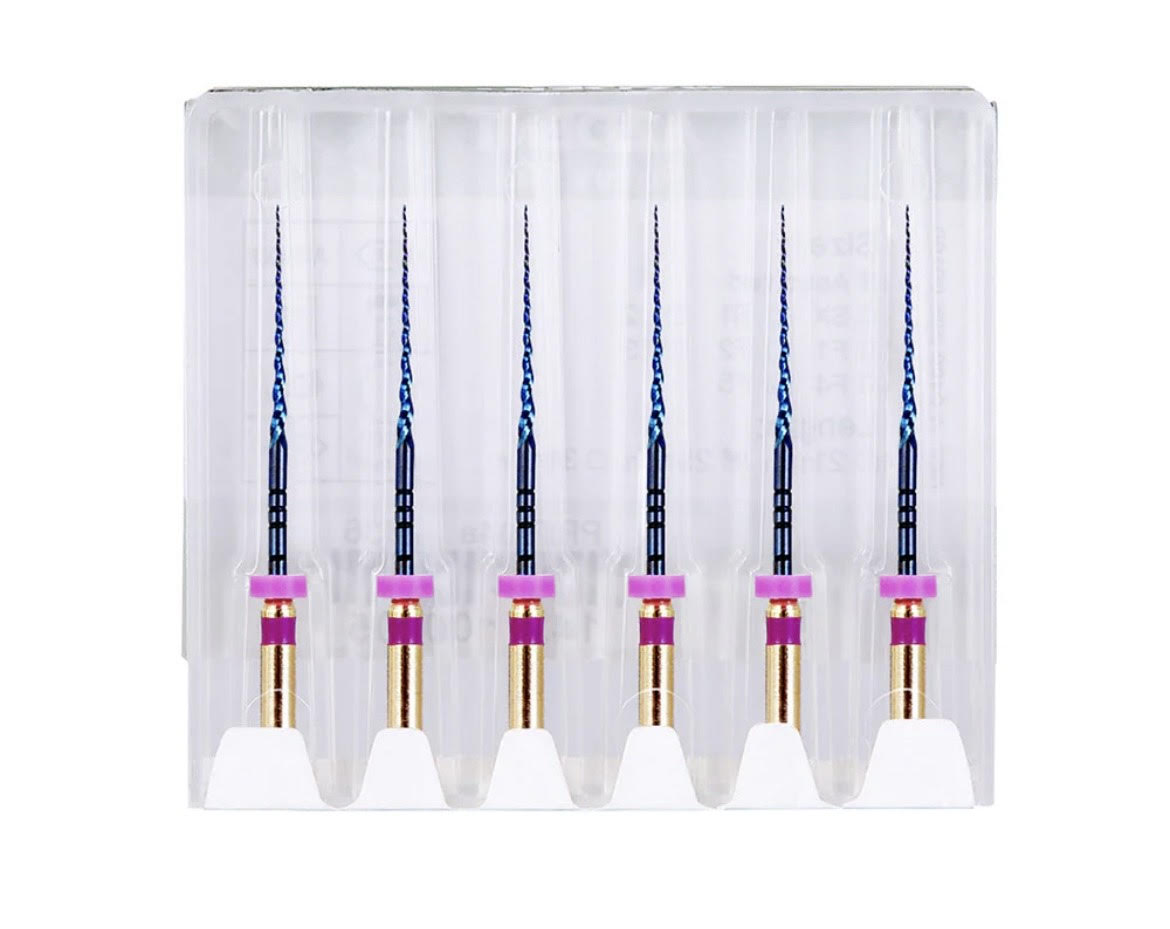
Təsvir
Straight-line access is a prerequisite for proper root canal treatment, files are no exception.
Multiple-use disinfection and re-sterilization cycles may lead to increased risk of file separation.
These instruments should not be immersed in a sodium hypochlorite solution.
Clean the flutes frequently during instrumentation, inspecting for signs of distortion or wear, such as uneven flutes, dull spots.
Frequently irrigate, recapitulate and irrigate the canal throughout the procedure, minimally after using each file.
files should only be used in regions of the canal that have a confirmed and reproducible glide path. Establish a reproducible glide path using hand files, at least an ISO 015 size.
Use the Shaping Files (S1, S2, and SX) with a brushing action on the withdrawal stroke in order to create straight-line radicular access.
Use the Finishing Files (F1, F2, F3, F4, and F5) with no brushing action.
Use the appropriate finishing files to passively follow the canal to the working length, and then withdraw immediately.
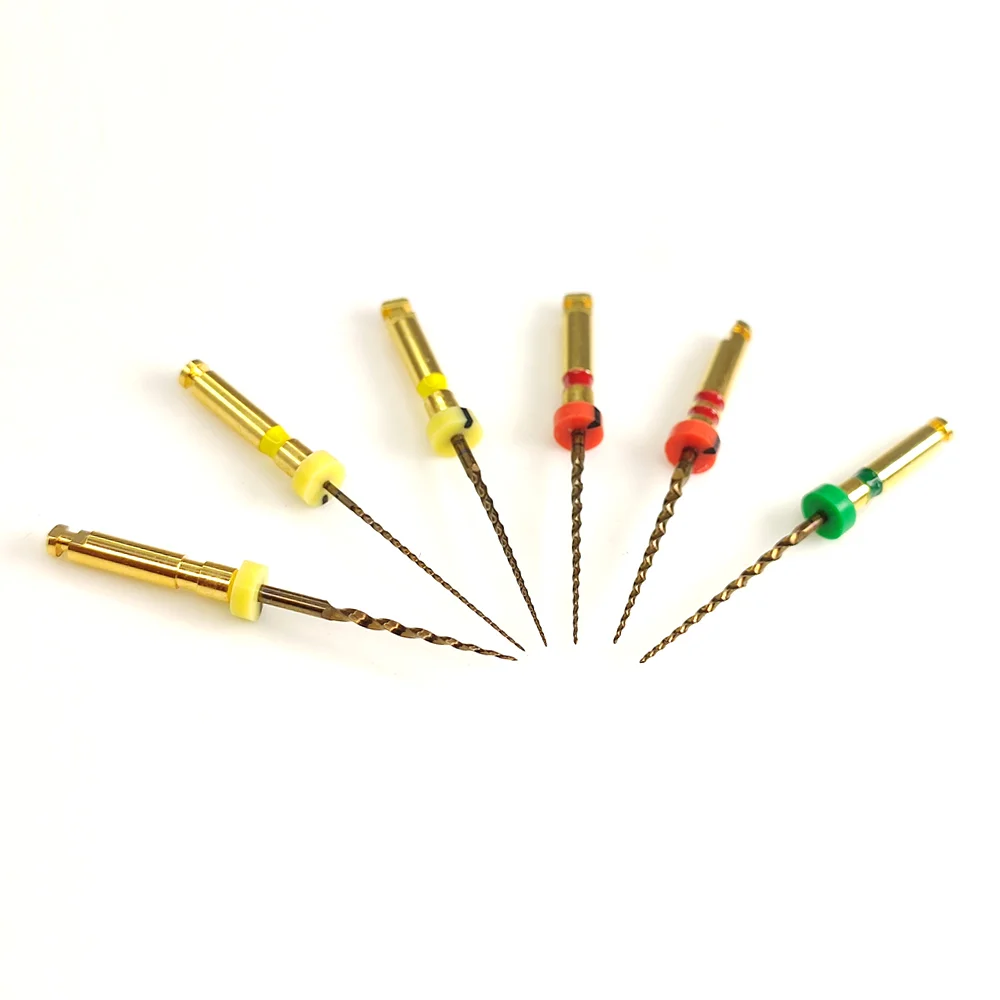
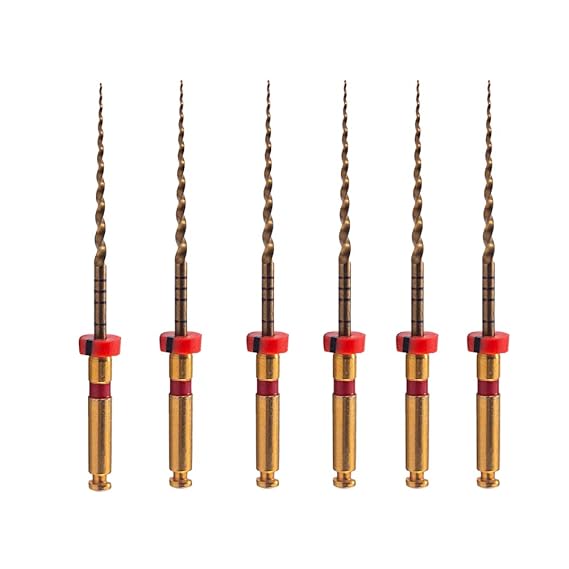
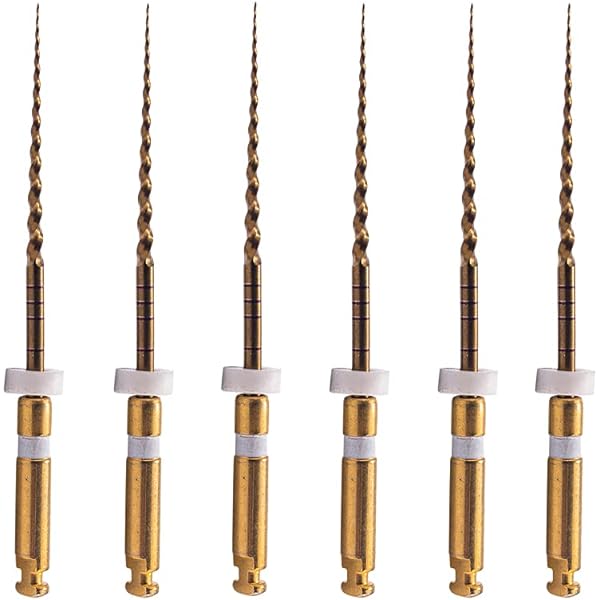
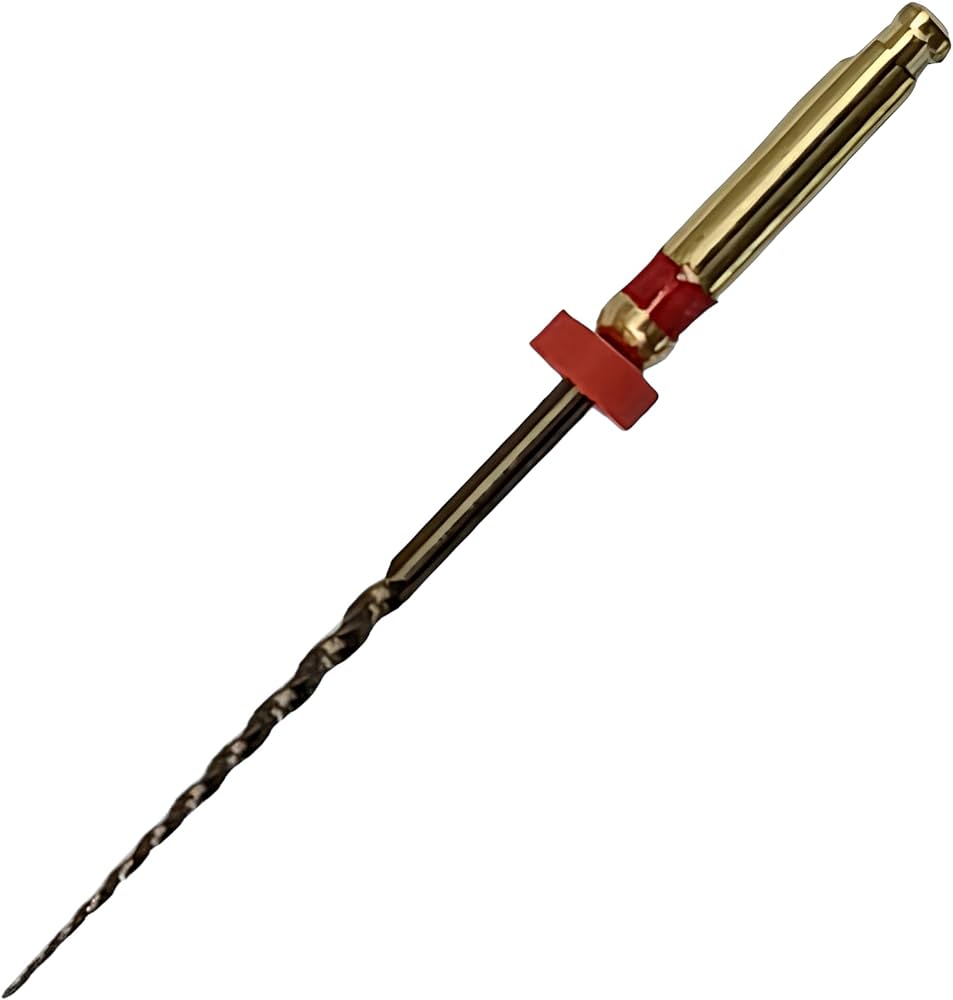
files are manufactured with a process that results in a file that has a gold appearance. Due to this proprietary processing, files may appear slightly curved. This is not a manufacturing defect. While the file can be easily straightened using only your fingers, it is not necessary to straighten the file prior to use. Once inside the canal, the file will follow the anatomy.
Always use minimal apical pressure. Never force the files down the canal.
For optimal usage, torque control devices are recommended.
The rotary files can be used at motor speeds between 250 rpm and 350 rpm. Recommended motor settings: